Sarcopenia in Singapore: The Comprehensive Guide on Muscle Loss, Risk, and What to Do About It
Your parents notice it slowly. Stairs feel harder. Groceries feel heavier. Getting up from a chair requires effort not needed before. Most assume it is just ageing.
But It isn't.
What they are experiencing is sarcopenia, the progressive loss of muscle mass, strength and function. Muscle loss begins earlier than most realise, accelerates faster than most expect and produces consequences far more serious than most people are prepared for.
In Singapore, where one in five residents will be aged 65 and above by 2026, sarcopenia is one of the most significant and underdiagnosed conditions affecting older adults. This guide explains what it is, who is at risk, what happens when it goes untreated, and what the medical evidence says about reversing it.
What Is Sarcopenia?
Sarcopenia is defined as the progressive loss of skeletal muscle mass, strength, and physical performance that occurs with ageing. The term comes from the Greek words for "flesh" (sarx) and "loss" (penia).
Sarcopenia is diagnosed using the Asian Working Group for Sarcopenia (AWGS) 2019 criteria, which assess three components: muscle mass (measured by DEXA scan), muscle strength (measured by handgrip), and physical performance (measured by gait speed or sit-to-stand test).
A person is considered to have sarcopenia when both muscle mass and either muscle strength or physical performance fall below the medical threshold.
How Common Is Sarcopenia in Singapore?
The Yishun Study, the first population-representative study of sarcopenia among Singaporeans, found that sarcopenia affected 13.6% of adults overall, and 33.2% of those aged 60 and above.
Despite this, most cases go undiagnosed. Sarcopenia produces no pain. It does not show up on a blood panel. Most older adults and their families attribute its effects to "getting old" and do not seek clinical help until function has significantly deteriorated.
When Does Muscle Loss Begin?
This is the aspect of sarcopenia that surprises most people: muscle loss begins in your 30s.
From approximately 30 years of age, adults lose between 3% and 8% of their muscle mass per decade. The rate of loss is relatively slow through the 30s and 40s, but accelerates sharply from around 60 onwards. By the age of 80, the average person has lost up to 50% of their peak muscle mass.
Why Does Sarcopenia Happen?
Sarcopenia is rarely caused by one single factor. It is the result of several interacting mechanisms.
Hormonal decline. Testosterone, estrogen, and growth hormone fall progressively with age. The decline in estrogen during menopause is particularly sharp, causing accelerated muscle and bone loss (osteoporosis) in women. Although testosterone decline in men is more gradual, it is equally as consequential over time.
Inactivity. Muscle is metabolically expensive. Without exercise, the body progressively breaks muscle to conserve energy. Sedentary living, such as desk work and car commuting accelerates the rate of muscle loss dramatically.
Inadequate protein intake. Older adults require more protein per kilogram of bodyweight than younger adults to achieve the same anabolic response, a phenomenon known as anabolic resistance. Most older Singaporeans consume well below the 1.2 grams per kilogram of bodyweight per day required to sustain protein synthesis.
Chronic inflammation. Elevated inflammatory markers common in individuals with obesity or poorly managed chronic conditions accelerate muscle protein breakdown and impair muscle protein synthesis simultaneously.
What If Sarcopenia Is Untreated?
Sarcopenia will not stay in the muscle. If left unaddressed, sarcopenia accelerates an individual towards frailty and premature death.
Falls and fractures. Skeletal muscle is the primary shock absorber that prevents falls. Weak and slow muscles cannot react quickly enough to correct a fall. Hip fractures carry a one-year mortality rate of up to 20 to 30% in older adults.
Type 2 Diabetes and metabolic disease. Skeletal muscle accounts for 80% of glucose clearance in your bloodstream. As muscle mass declines, so does the body's capacity to regulate blood sugar. Sarcopenia is a risk factor for Type 2 Diabetes
Cardiovascular disease. Low muscle mass is independently associated with higher rates of cardiac events, regardless of body fat percentage. Muscle produces myokines, which are anti-inflammatory signalling proteins that protect vascular health.
Cognitive decline. Skeletal muscle produces brain-derived neurotrophic factor (BDNF) and other myokines that cross the blood-brain barrier and support neuronal health. Physical inactivity and sarcopenia are both independently associated with increased risk of dementia and Alzheimer's disease.
What Is the Treatment for Sarcopenia?
The Singapore Clinical Practice Guidelines strongly recommend resistance-based exercise as the primary treatment for sarcopenia. Progressive resistance training is the most effective intervention for reversing sarcopenia at ANY age.
For meaningful improvement, the exercise must meet specific criteria:
It must be progressive. The load must increase over time as the body adapts. If the exercise consistently feels comfortable, the body is not receiving an adequate stimulus. A training programme that does not progress is just maintenance.
It must be sufficiently challenging. An RPE (Rate of Perceived Exertion) of 7 out of 10 is typically required to produce improvements in muscle mass and strength. Gentle movement and stretching classes do not work.
It should include compound movements. Exercises that load multiple joints and large muscle groups simultaneously, such as squats and deadlifts, provide anabolic and functional stimulus compared to seated isolation exercises.
Starting Treatment at Any Age
One of the most persistent misconceptions about sarcopenia is that it is too late to do anything about it in older age. No.
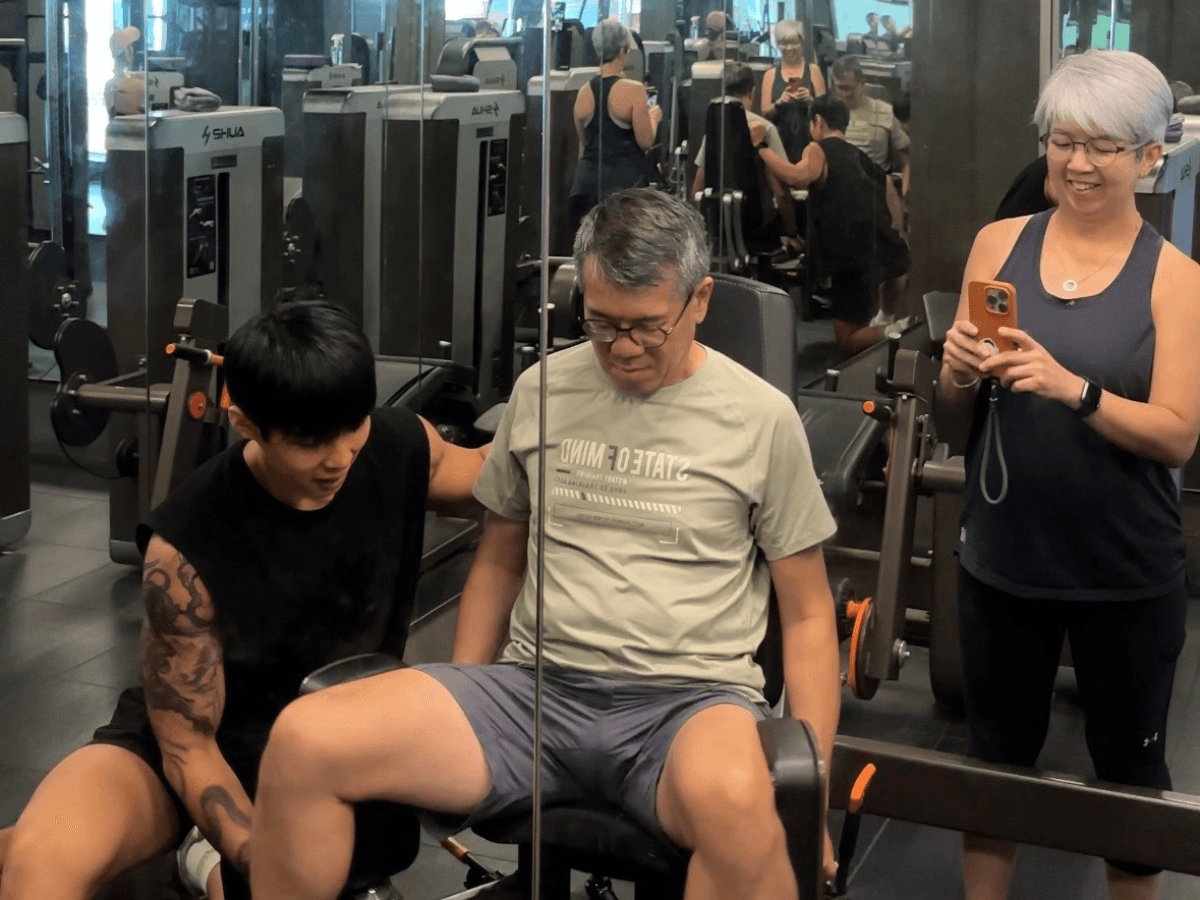
My elderly clients have seen meaningful improvements in muscle mass and strength with no prior exercise history. The body has the capacity to adapt to progressive loading throughout the entire lifespan.
The best time to begin was ten years ago. The second-best time is now.
Working with Davin at Informed Exercise
At Informed Exercise, every programme begins with a full clinical assessment — including review of your medical history, functional capacity, fall risk, current medication, and where relevant, DEXA or BIA results. Exercise is then prescribed with the same intentionality as a medical intervention: specific, progressive, documented, and designed to work alongside your healthcare team under the Healthier SG framework.
If you or a family member has been diagnosed with sarcopenia or osteopenia, or if you are concerned about muscle loss, declining function, or fall risk, book a clinical assessment with Davin at Informed Exercise.
Davin Choo is an ACE-Certified Personal Trainer and ACSM Exercise is Medicine practitioner based in Singapore, specialising in clinical exercise for chronic disease management, sarcopenia, active ageing, and post-rehabilitation. Informed Exercise operates as a Healthier SG partner.
References
Pang BWJ, et al. (2021). Prevalence and Associated Factors of Sarcopenia in Singaporean Adults — The Yishun Study. Journal of the American Medical Directors Association, 22(4).
Lim WS, et al. (2022). Singapore Clinical Practice Guidelines For Sarcopenia: Screening, Diagnosis, Management and Prevention. The Journal of Frailty & Aging, 11(4), 348–369.
Chen CY, et al. (2025). Why frailty and sarcopenia matter to everyone. Singapore Medical Journal, 66(Suppl 1).
Cruz-Jentoft AJ, et al. (2019). Sarcopenia: revised European consensus on definition and diagnosis (EWGSOP2). Age and Ageing, 48(1), 16–31.
Your parents notice it slowly. Stairs feel harder. Groceries feel heavier. Getting up from a chair requires effort not needed before. Most assume it is just ageing.
But It isn't.
What they are experiencing is sarcopenia, the progressive loss of muscle mass, strength and function. Muscle loss begins earlier than most realise, accelerates faster than most expect and produces consequences far more serious than most people are prepared for.
In Singapore, where one in five residents will be aged 65 and above by 2026, sarcopenia is one of the most significant and underdiagnosed conditions affecting older adults. This guide explains what it is, who is at risk, what happens when it goes untreated, and what the medical evidence says about reversing it.
What Is Sarcopenia?
Sarcopenia is defined as the progressive loss of skeletal muscle mass, strength, and physical performance that occurs with ageing. The term comes from the Greek words for "flesh" (sarx) and "loss" (penia).
Sarcopenia is diagnosed using the Asian Working Group for Sarcopenia (AWGS) 2019 criteria, which assess three components: muscle mass (measured by DEXA scan), muscle strength (measured by handgrip), and physical performance (measured by gait speed or sit-to-stand test).
A person is considered to have sarcopenia when both muscle mass and either muscle strength or physical performance fall below the medical threshold.
How Common Is Sarcopenia in Singapore?
The Yishun Study, the first population-representative study of sarcopenia among Singaporeans, found that sarcopenia affected 13.6% of adults overall, and 33.2% of those aged 60 and above.
Despite this, most cases go undiagnosed. Sarcopenia produces no pain. It does not show up on a blood panel. Most older adults and their families attribute its effects to "getting old" and do not seek clinical help until function has significantly deteriorated.
When Does Muscle Loss Begin?
This is the aspect of sarcopenia that surprises most people: muscle loss begins in your 30s.
From approximately 30 years of age, adults lose between 3% and 8% of their muscle mass per decade. The rate of loss is relatively slow through the 30s and 40s, but accelerates sharply from around 60 onwards. By the age of 80, the average person has lost up to 50% of their peak muscle mass.
Why Does Sarcopenia Happen?
Sarcopenia is rarely caused by one single factor. It is the result of several interacting mechanisms.
Hormonal decline. Testosterone, estrogen, and growth hormone fall progressively with age. The decline in estrogen during menopause is particularly sharp, causing accelerated muscle and bone loss (osteoporosis) in women. Although testosterone decline in men is more gradual, it is equally as consequential over time.
Inactivity. Muscle is metabolically expensive. Without exercise, the body progressively breaks muscle to conserve energy. Sedentary living, such as desk work and car commuting accelerates the rate of muscle loss dramatically.
Inadequate protein intake. Older adults require more protein per kilogram of bodyweight than younger adults to achieve the same anabolic response, a phenomenon known as anabolic resistance. Most older Singaporeans consume well below the 1.2 grams per kilogram of bodyweight per day required to sustain protein synthesis.
Chronic inflammation. Elevated inflammatory markers common in individuals with obesity or poorly managed chronic conditions accelerate muscle protein breakdown and impair muscle protein synthesis simultaneously.
What If Sarcopenia Is Untreated?
Sarcopenia will not stay in the muscle. If left unaddressed, sarcopenia accelerates an individual towards frailty and premature death.
Falls and fractures. Skeletal muscle is the primary shock absorber that prevents falls. Weak and slow muscles cannot react quickly enough to correct a fall. Hip fractures carry a one-year mortality rate of up to 20 to 30% in older adults.
Type 2 Diabetes and metabolic disease. Skeletal muscle accounts for 80% of glucose clearance in your bloodstream. As muscle mass declines, so does the body's capacity to regulate blood sugar. Sarcopenia is a risk factor for Type 2 Diabetes
Cardiovascular disease. Low muscle mass is independently associated with higher rates of cardiac events, regardless of body fat percentage. Muscle produces myokines, which are anti-inflammatory signalling proteins that protect vascular health.
Cognitive decline. Skeletal muscle produces brain-derived neurotrophic factor (BDNF) and other myokines that cross the blood-brain barrier and support neuronal health. Physical inactivity and sarcopenia are both independently associated with increased risk of dementia and Alzheimer's disease.
What Is the Treatment for Sarcopenia?
The Singapore Clinical Practice Guidelines strongly recommend resistance-based exercise as the primary treatment for sarcopenia. Progressive resistance training is the most effective intervention for reversing sarcopenia at ANY age.
For meaningful improvement, the exercise must meet specific criteria:
It must be progressive. The load must increase over time as the body adapts. If the exercise consistently feels comfortable, the body is not receiving an adequate stimulus. A training programme that does not progress is just maintenance.
It must be sufficiently challenging. An RPE (Rate of Perceived Exertion) of 7 out of 10 is typically required to produce improvements in muscle mass and strength. Gentle movement and stretching classes do not work.
It should include compound movements. Exercises that load multiple joints and large muscle groups simultaneously, such as squats and deadlifts, provide anabolic and functional stimulus compared to seated isolation exercises.
Starting Treatment at Any Age
One of the most persistent misconceptions about sarcopenia is that it is too late to do anything about it in older age. No.
My elderly clients have seen meaningful improvements in muscle mass and strength with no prior exercise history. The body has the capacity to adapt to progressive loading throughout the entire lifespan.
The best time to begin was ten years ago. The second-best time is now.
Working with Davin at Informed Exercise
At Informed Exercise, every programme begins with a full clinical assessment — including review of your medical history, functional capacity, fall risk, current medication, and where relevant, DEXA or BIA results. Exercise is then prescribed with the same intentionality as a medical intervention: specific, progressive, documented, and designed to work alongside your healthcare team under the Healthier SG framework.
If you or a family member has been diagnosed with sarcopenia or osteopenia, or if you are concerned about muscle loss, declining function, or fall risk, book a clinical assessment with Davin at Informed Exercise.
Davin Choo is an ACE-Certified Personal Trainer and ACSM Exercise is Medicine practitioner based in Singapore, specialising in clinical exercise for chronic disease management, sarcopenia, active ageing, and post-rehabilitation. Informed Exercise operates as a Healthier SG partner.
References
Pang BWJ, et al. (2021). Prevalence and Associated Factors of Sarcopenia in Singaporean Adults — The Yishun Study. Journal of the American Medical Directors Association, 22(4).
Lim WS, et al. (2022). Singapore Clinical Practice Guidelines For Sarcopenia: Screening, Diagnosis, Management and Prevention. The Journal of Frailty & Aging, 11(4), 348–369.
Chen CY, et al. (2025). Why frailty and sarcopenia matter to everyone. Singapore Medical Journal, 66(Suppl 1).
Cruz-Jentoft AJ, et al. (2019). Sarcopenia: revised European consensus on definition and diagnosis (EWGSOP2). Age and Ageing, 48(1), 16–31.
FAQ
Answers to your questions
Get quick, clear information about our services, appointments, support, and more
🏠 Do you do home visits for elderly clients?
⏰ How long does a session take?
🏥 What conditions do you work with?
📊 What kind of results can I expect?
🏷️ How much do sessions cost?
🚀 How do I get started?
FAQ
Answers to your questions
Get quick, clear information about our services, appointments, support, and more
🏠 Do you do home visits for elderly clients?
⏰ How long does a session take?
🏥 What conditions do you work with?
📊 What kind of results can I expect?
🏷️ How much do sessions cost?
🚀 How do I get started?
FAQ
Answers to your questions
Get quick, clear information about our services, appointments, support, and more
🏠 Do you do home visits for elderly clients?
⏰ How long does a session take?
🏥 What conditions do you work with?
📊 What kind of results can I expect?
🏷️ How much do sessions cost?
🚀 How do I get started?