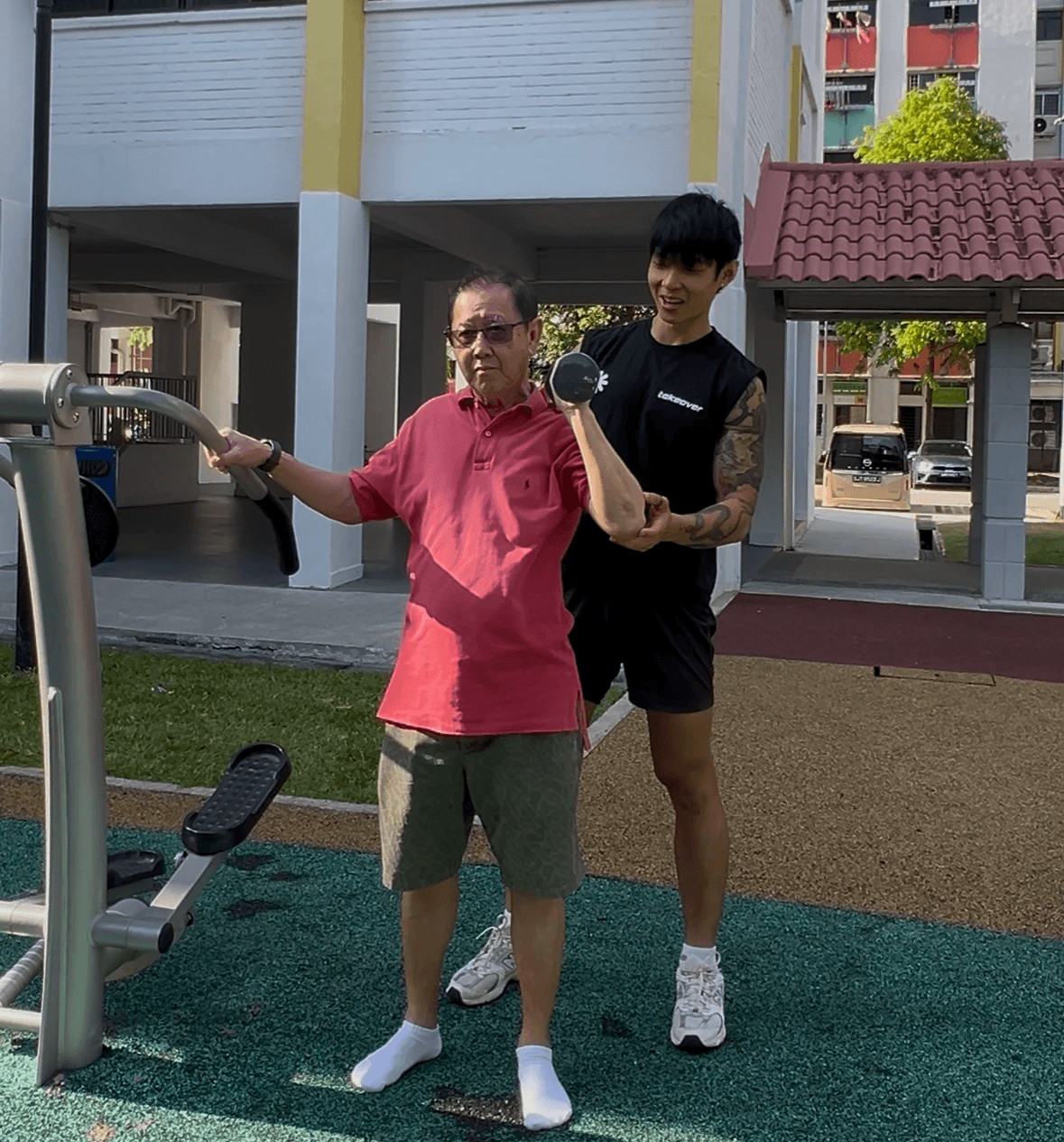
If your parents are in their 60s or 70s, the most important thing they can do for their health right now is not see the doctor more often, take more supplements, or eat less.
It is to lift weights.
This is not my opinion. It is medical advice backed by an extensive body of evidence. The Ministry of Health recommends resistance-based exercise as the primary intervention for muscle loss and chronic conditions in older adults.
Most of the older adults I work with didn't come in because they wanted to. They came in because someone who loved them made them. This post is for someone like you.
What's actually happening to your parents' bodies
Most people think of muscle as something younger people build at the gym. It isn't. Skeletal muscle is a metabolic organ that:
Clears blood sugar after every meal.
produces signalling molecules that protect the brain and heart.
is the structural foundation that makes independent living possible, like getting out of a chair, climbing stairs and carrying shopping bags
After 30, we lose muscle steadily. After 60, the loss accelerates, and by 80, the average person has lost up to half their peak muscle mass. The condition is sarcopenia, and the Yishun Study, the first population-representative research conducted on Singaporeans, found that 1 in 3 adults over 60 here already has it. Most have no idea.
What muscle loss actually leads to
A fall that seemed like bad luck. A hip fracture that required surgery and months of recovery. A parent who pauses before climbing stairs.
These are not random misfortunes. They are predictable outcomes of muscle loss that went unaddressed for years.
For families, the consequences are practical as well as medical. A parent who fractures a hip means emergency leave and decisions that no child is ever quite ready to make. The financial and logistical weight lands on the family, often without warning, and the costs are high but easily avoidable.
Why walking isn't enough
"But my mum already walks every morning."
I hear this often. Walking helps, but it does not build or preserve skeletal muscle in a clinically meaningful way. To maintain and rebuild muscle, the body needs progressive mechanical load. Resistance that challenges it forces adaptation and increases over time. Nothing else replicates this. Not walking. Not swimming and not staying active.
The research is definitive. Progressive resistance training improves muscle mass, strength, and balance in older adults. It reduces fall risk. It improves blood sugar control. It is effective at any age including in adults in their 80s and 90s who have never trained before.
The case for now
Muscle loss is slow and silent. It doesn't announce itself until the consequences do.
The earlier your parent starts, the more they protect. The longer they wait, the more they have to recover. A parent who begins at 62 has a meaningfully different outcome at 75 than one who waits for a fall to decide for them.
Strength training is not about looking better or performing athletically. For older adults in Singapore, it is about staying independent and in charge of their own lives — and giving the people who love them one less thing to worry about.
If your parents are in their 60s or 70s, the most important thing they can do for their health right now is not see the doctor more often, take more supplements, or eat less.
It is to lift weights.
This is not my opinion. It is medical advice backed by an extensive body of evidence. The Ministry of Health recommends resistance-based exercise as the primary intervention for muscle loss and chronic conditions in older adults.
Most of the older adults I work with didn't come in because they wanted to. They came in because someone who loved them made them. This post is for someone like you.
What's actually happening to your parents' bodies
Most people think of muscle as something younger people build at the gym. It isn't. Skeletal muscle is a metabolic organ that:
Clears blood sugar after every meal.
produces signalling molecules that protect the brain and heart.
is the structural foundation that makes independent living possible, like getting out of a chair, climbing stairs and carrying shopping bags
After 30, we lose muscle steadily. After 60, the loss accelerates, and by 80, the average person has lost up to half their peak muscle mass. The condition is sarcopenia, and the Yishun Study, the first population-representative research conducted on Singaporeans, found that 1 in 3 adults over 60 here already has it. Most have no idea.
What muscle loss actually leads to
A fall that seemed like bad luck. A hip fracture that required surgery and months of recovery. A parent who pauses before climbing stairs.
These are not random misfortunes. They are predictable outcomes of muscle loss that went unaddressed for years.
For families, the consequences are practical as well as medical. A parent who fractures a hip means emergency leave and decisions that no child is ever quite ready to make. The financial and logistical weight lands on the family, often without warning, and the costs are high but easily avoidable.
Why walking isn't enough
"But my mum already walks every morning."
I hear this often. Walking helps, but it does not build or preserve skeletal muscle in a clinically meaningful way. To maintain and rebuild muscle, the body needs progressive mechanical load. Resistance that challenges it forces adaptation and increases over time. Nothing else replicates this. Not walking. Not swimming and not staying active.
The research is definitive. Progressive resistance training improves muscle mass, strength, and balance in older adults. It reduces fall risk. It improves blood sugar control. It is effective at any age including in adults in their 80s and 90s who have never trained before.
The case for now
Muscle loss is slow and silent. It doesn't announce itself until the consequences do.
The earlier your parent starts, the more they protect. The longer they wait, the more they have to recover. A parent who begins at 62 has a meaningfully different outcome at 75 than one who waits for a fall to decide for them.
Strength training is not about looking better or performing athletically. For older adults in Singapore, it is about staying independent and in charge of their own lives — and giving the people who love them one less thing to worry about.
FAQ
Answers to your questions
Get quick, clear information about our services, appointments, support, and more
🏠 Do you do home visits for elderly clients?
⏰ How long does a session take?
🏥 What conditions do you work with?
📊 What kind of results can I expect?
🏷️ How much do sessions cost?
🚀 How do I get started?
FAQ
Answers to your questions
Get quick, clear information about our services, appointments, support, and more
🏠 Do you do home visits for elderly clients?
⏰ How long does a session take?
🏥 What conditions do you work with?
📊 What kind of results can I expect?
🏷️ How much do sessions cost?
🚀 How do I get started?
FAQ
Answers to your questions
Get quick, clear information about our services, appointments, support, and more
🏠 Do you do home visits for elderly clients?
⏰ How long does a session take?
🏥 What conditions do you work with?
📊 What kind of results can I expect?
🏷️ How much do sessions cost?
🚀 How do I get started?